|
A History of the Art of Scrimshaw
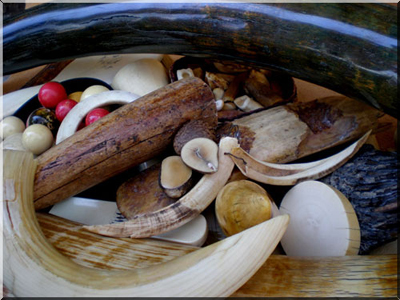
Scrimshaw is an art form with a long history. Early man hunted
the wooly mammoth and mastodon for food. The beautiful tusks
were used to make tools and talismans which were believed to
carry the protective spirit of the animal. Early Egyptians and
Eskimos alike utilized the ivories in their environments and
carved them into useful and decorative pieces.
In the early nineteenth century, ships sailed the seas to hunt
for whales. The sailors were often away from home for months,
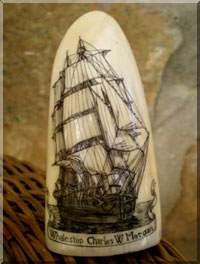
even years at a time. Some sailors used their idle time to carve
whale teeth and bones. The work was mostly crude; lines cut with
pocketknives or sail needles depicted mainly nautical themes.
The lines were filled with squid ink or lampblack to contrast
with the light ivory. From the varied dialects of the ocean whalers,
this new pastime came to be known as scrimshaw.
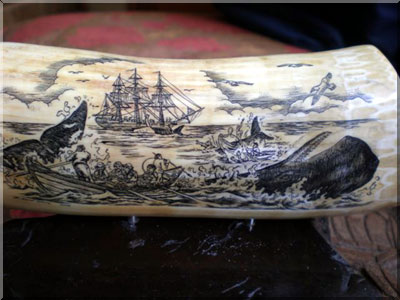
Here is Linda's version of a traditional
whaling scene. This piece of elephant ivory is 4" wide.
Scrimshaw virtually disappeared when whaling ended. Nearly
a century later, President Kennedy collected historical scrimshaw
and commissioned artists to create new works for his collection.
Scrimshaw saw a revival and began to evolve as new artists were
attracted to this unique form of art. Today, fine tools are used
with a variety of pigments in a full pallet of colors to produce
works of lasting beauty. |